

The Pittman-Robertson Act Explained
How a Depression-Era Gun Tax Saved America's Wildlife and Still Funds Conservation Today

Stand in any American forest today, and you’re likely to hear wild turkeys calling. Watch a meadow at dusk, and deer will emerge like clockwork. These scenes feel timeless, natural, inevitable. They’re not. They’re the direct result of an 87-year-old tax that most Americans have never heard of—even though they’ve probably paid it.
The Federal Aid in Wildlife Restoration Act of 1937, known as the Pittman-Robertson Act, represents one of conservation’s strangest success stories: an industry that lobbied to tax itself, hunters who agreed to pay more for their gear, and a funding mechanism so clever it’s generated over $17 billion for wildlife without most taxpayers even knowing it exists.
The Desperate Beginning
To understand Pittman-Robertson, you need to understand how bad things were. In 1931, when 72-year-old blacksmith Joseph List signed his one-dollar hunting license in Sardinia, Ohio, the regulations told a grim story. Deer: Protected (meaning none left to hunt). Ruffed grouse: Protected. Wild turkey: Not even mentioned—the species had been completely wiped out from the state.
This wasn’t unusual. By the 1930s, American wildlife was essentially liquidated. Market hunting had eliminated passenger pigeons entirely. Bison existed only in zoos. Wild turkeys had vanished from 18 states. The American wilderness was becoming a memory, and hunters like Joseph List were signing licenses for ghosts.
The Unlikely Architects
The Act bears the names of Senator Key Pittman of Nevada and Representative Willis Robertson of Virginia, but the real story involves a broader cast of characters who understood something revolutionary: conservation needed permanent funding, not charity.
Key Pittman lived the kind of life that sounds made-up. A Southern gentleman turned Klondike gold miner, he reportedly met his wife after a sled dog fight in an Alaskan snowstorm. By the time he reached the Senate, Pittman understood viscerally what it meant to depend on wild country. His support for the Act reflected a Westerner’s knowledge that without wildlife, the frontier was just empty land.
Willis Robertson contributed what insiders still call “the 29 words”—a provision stating that states could only receive federal funds if they promised not to raid their hunting license revenue for other purposes. Before this, state legislatures routinely pillaged fish and game funds to build roads or balance budgets. Robertson’s clause ended that practice overnight.
But the real magic came from Carl Shoemaker, a former Oregon game warden who convinced the firearms industry to support a permanent excise tax on their own products. When the bill stalled in committee, Shoemaker played hardball. He mobilized women’s groups and garden clubs across Illinois to pressure the committee chairman, Representative Scott Lucas. The pressure campaign worked so well that Lucas eventually found Shoemaker near his office and shouted, “For God’s sake, Carl, take the women off my back, and I’ll report the bill at once!”
The bill passed without opposition shortly after.
The Industry Steps Up
The firearms industry’s support wasn’t just altruism—it was shrewd business. Charles L. Horn, president of Federal Cartridge Company, emerged as a key industry champion, but he drove a hard bargain. Horn would only support the tax if the government’s cut for “administrative costs” was capped at 8% instead of the proposed 10%, ensuring more money reached actual conservation work.
Horn was no stranger to creative solutions. When traditional competitors blocked his company from major distribution channels in the 1920s, he built Federal Cartridge by selling shotgun shells in barber shops, gas stations, pool halls, and even dentist offices. (Years later, he’d help finance Anoka, Minnesota’s city hall—famously built in the shape of a handgun when viewed from above.)
In 1937, these industry leaders agreed to tax themselves at 10% (later 11%) on guns and ammunition. They recognized a simple truth: without wildlife, they had no customers.
How the Money Machine Works
Here’s the elegant simplicity: every time someone buys a firearm, ammunition, or archery equipment, they pay an excise tax:
Long guns (rifles, shotguns): 11%
Ammunition: 11%
Handguns: 10%
Archery equipment: 11%
These funds flow into the Wildlife Restoration Account, managed by the U.S. Fish and Wildlife Service. Unlike most government programs that depend on annual appropriations and political whims, Pittman-Robertson money is automatic and dedicated. Buy a box of shells, fund conservation. It’s that simple.
The money gets distributed to states based on a formula considering both land area and number of licensed hunters. States must match federal funds with 25% of their own money (usually from hunting license sales), then use it for approved projects: habitat restoration, research, land acquisition, and hunter education.
The Restoration Nobody Talks About
The results have been staggering. Remember Joseph List’s 1931 license with its list of protected and extinct species? Today, Ohio has thriving populations of deer, grouse, and turkey. Nationally, wild turkeys increased from 30,000 birds to over 7 million. White-tailed deer rebounded from near-extinction to over 30 million.
In Texas, the program’s impact runs deep. The Sierra Diablo Wildlife Management Area used Pittman-Robertson funds to bring back desert bighorn sheep that had been extinct in the state since 1960. The Gus A. Engeling Wildlife Management Area near Palestine became a model for habitat management—though its namesake biologist was tragically shot and killed by a poacher on that very land in 1951, a grim reminder of what conservationists sometimes face.
Even species outside the traditional hunting realm benefited. When commercial overfishing devastated Texas’s red drum (redfish) in the 1980s, the related Dingell-Johnson Act (modeled after P-R for fishing) funded hatcheries that released 624 million fingerlings between 1983 and 2011, bringing the species back from the brink.
The Modern Twist Nobody Saw Coming
Here’s where the story gets complicated. In fiscal year 2021, handguns—mostly purchased for self-defense or target shooting rather than hunting—provided the single largest share of revenue at 34%, compared to 30% for ammunition and 29% for long guns. The “user pays” model that made so much sense in 1937 has morphed into something else entirely: non-hunters unknowingly funding conservation on a massive scale.
This shift creates remarkable returns. One industry study showed that for every dollar firearm manufacturers pay in P-R taxes, they see a return on investment between 823% and 1,588% because of the increased recreational opportunities the funds create. It’s perhaps the only tax in American history where the taxed industry actively lobbies to keep paying it.
But it also creates an ethical pretzel. State wildlife agencies now depend on gun sales that spike during political uncertainty. The “Obama Bump” sent P-R funds soaring to $808 million in 2015. Conservation funding rides the waves of America’s culture wars.
What Pittman-Robertson Can’t Do
The Act isn’t perfect. Federal regulations restrict funds to “birds and mammals,” leaving out reptiles, amphibians, and insects—the majority of species now facing extinction. While turkey populations soared, lesser-known species without hunting constituencies struggled for attention and funding.
There’s also the “non-hunter user gap.” Estimates suggest up to 95% of people using lands improved with Pittman-Robertson funds are hikers, birdwatchers, and photographers who contribute nothing directly to the system. Proposals for a “backpack tax” to spread the funding burden have repeatedly failed, leaving hunters and gun owners as the primary funders of public wildlife benefits.
The 2019 Evolution
Recognizing that hunting participation was declining while gun ownership was rising, Congress modernized the Act in 2019. States can now use funds for “R3” efforts—Recruit, Retain, and Reactivate hunters and shooters. The modernization also increased support for shooting ranges, changing the federal match from 75% to 90% for range construction. It’s an acknowledgment that target shooters, not just hunters, are keeping the conservation funding flowing.
Why This Matters Now
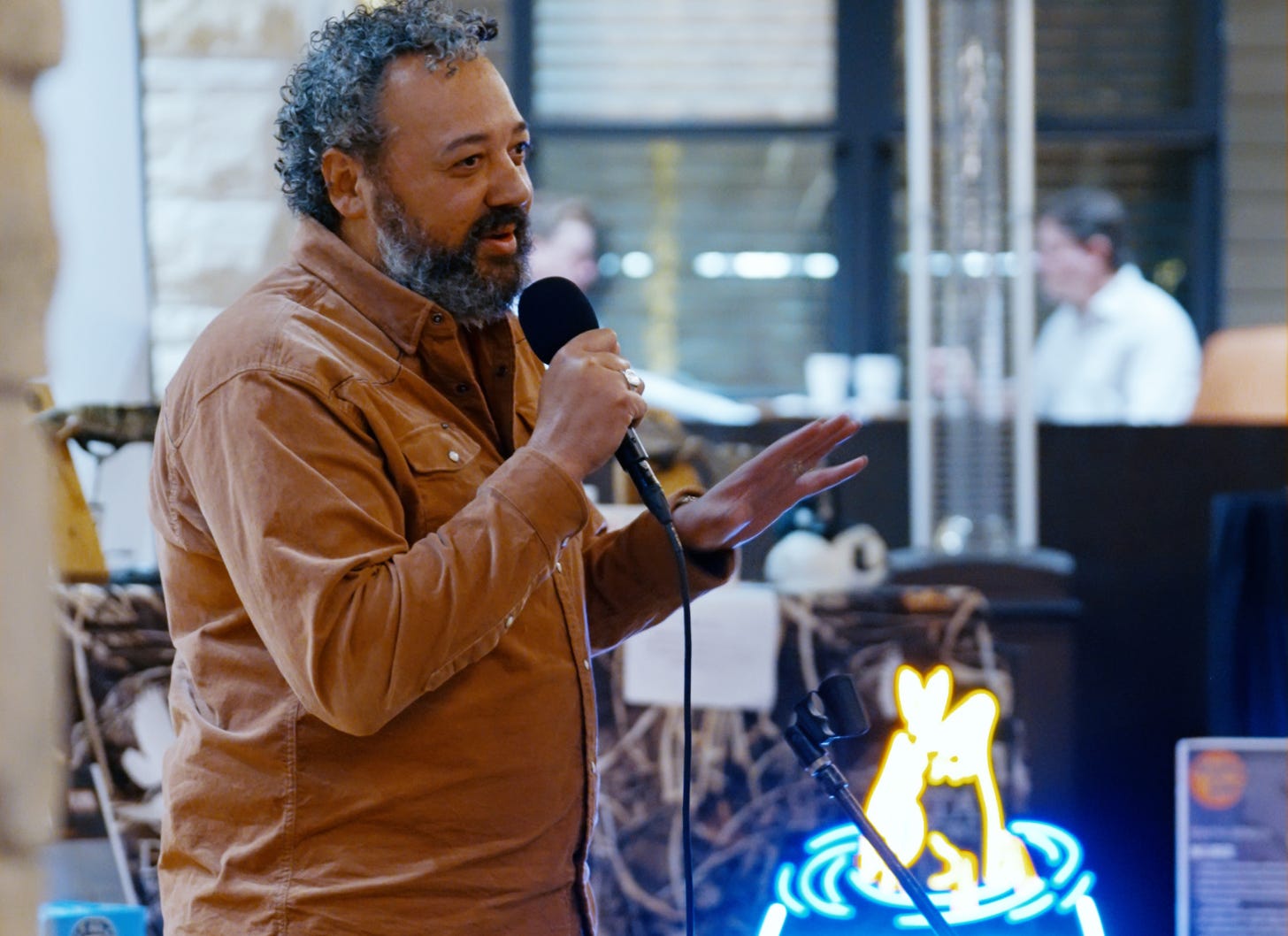
As I spoke at that Delta Waterfowl banquet in Austin, surrounded by sharp young professionals who absolutely understood Pittman-Robertson, I realized something important. These weren’t wide-eyed newcomers—they were attorneys and tech executives who could quote funding percentages and state allocations. They got it deeply.
But that room represented maybe 0.01% of Americans. Outside those walls, even among outdoor enthusiasts, Pittman-Robertson remains conservation’s best-kept secret. The hikers on lands improved with P-R funds, the photographers capturing wildlife recovered through P-R programs, the suburban homeowners watching turkeys in their yards—most have no idea this system exists.
The Uncomfortable Truth Worth Celebrating
The Pittman-Robertson Act forces us to confront a remarkable reality: American conservation is inextricably linked to American gun culture. The recovery of our wildlife—those turkeys calling at dawn, those deer in suburban backyards—exists because millions of Americans buy firearms. Since 1939, the program has distributed nearly $17 billion to the states.
This isn’t a bug in the system; it’s the feature that saved American wildlife.
But here’s what’s changed: In fiscal year 2021, handguns provided 34% of the revenue, mostly purchased for self-defense or target shooting rather than hunting. The funding still flows, but many of today’s contributors have never sat in a duck blind or tracked a deer. They’re unknowing conservationists, funding habitat restoration with every box of ammunition they buy at the range.
The Call to Action
This shift makes hunters more important than ever—not as funders, but as voices. The young professionals at that [Delta Waterfowl banquet in Austin](/blog/young-guns-old-promises) understood this instinctively. They weren’t just writing checks; they were organizing, advocating, ensuring those P-R dollars flow to the projects that matter most.
Because here’s the thing: money without direction is just money. It takes people who understand the land, who notice when migrations shift or habitat degrades, to ensure those billions actually restore the wild. It takes hunters to stand up at commission meetings, to push for science-based management, to mentor newcomers who might otherwise never understand why any of this matters.
The genius of Pittman-Robertson was making conservation funding automatic. But automatic funding still needs manual steering. As fewer gun owners hunt, those who do must become louder advocates, clearer teachers, better storytellers. We need to be Carl Shoemaker mobilizing garden clubs, Charles Horn negotiating for every percentage point, Joseph List’s descendants explaining why that 1931 “Protected” designation was temporary, not permanent.
Every time you see a wild turkey or photograph a deer, you’re looking at the dividend of an 87-year investment, paid for one bullet at a time. That’s the beautiful, complicated truth of American conservation—a system that works precisely because people who use the resource most intimately have always fought hardest to protect it. That responsibility hasn’t changed. If anything, it’s grown more urgent.
The north wind will blow again this fall. The ducks will come. And they’ll keep coming as long as hunters remain not just funders, but guardians of the system their great-grandfathers built.